
The complete guide
How to Choose an Organic Latex Pillow That Actually Suits Your Sleep
The pillow problem nobody talks about
You can spend months choosing a mattress and then ruin the whole thing with a bad pillow. It happens constantly. The mattress holds your spine level from hips to shoulders, and then your head tips up or drops down because the pillow under it has given up.
Most pillows do give up. Polyester fill mats into lumps. Down and feather migrate to the edges, which is why you end up punching the middle back into shape at two in the morning. Memory foam holds its shape better but traps heat and takes a moment to respond when you turn over. None of these are disasters on their own. They just add up, and after a year or two you are sleeping on something noticeably worse than what you bought.
Latex sits in a different category because it is not fill at all. It is a solid molded core of foamed rubber. There is nothing to clump, nothing to migrate, nothing to redistribute itself overnight. That one structural difference is the main reason people who switch to latex rarely switch back.
What Talalay latex is and why the process matters
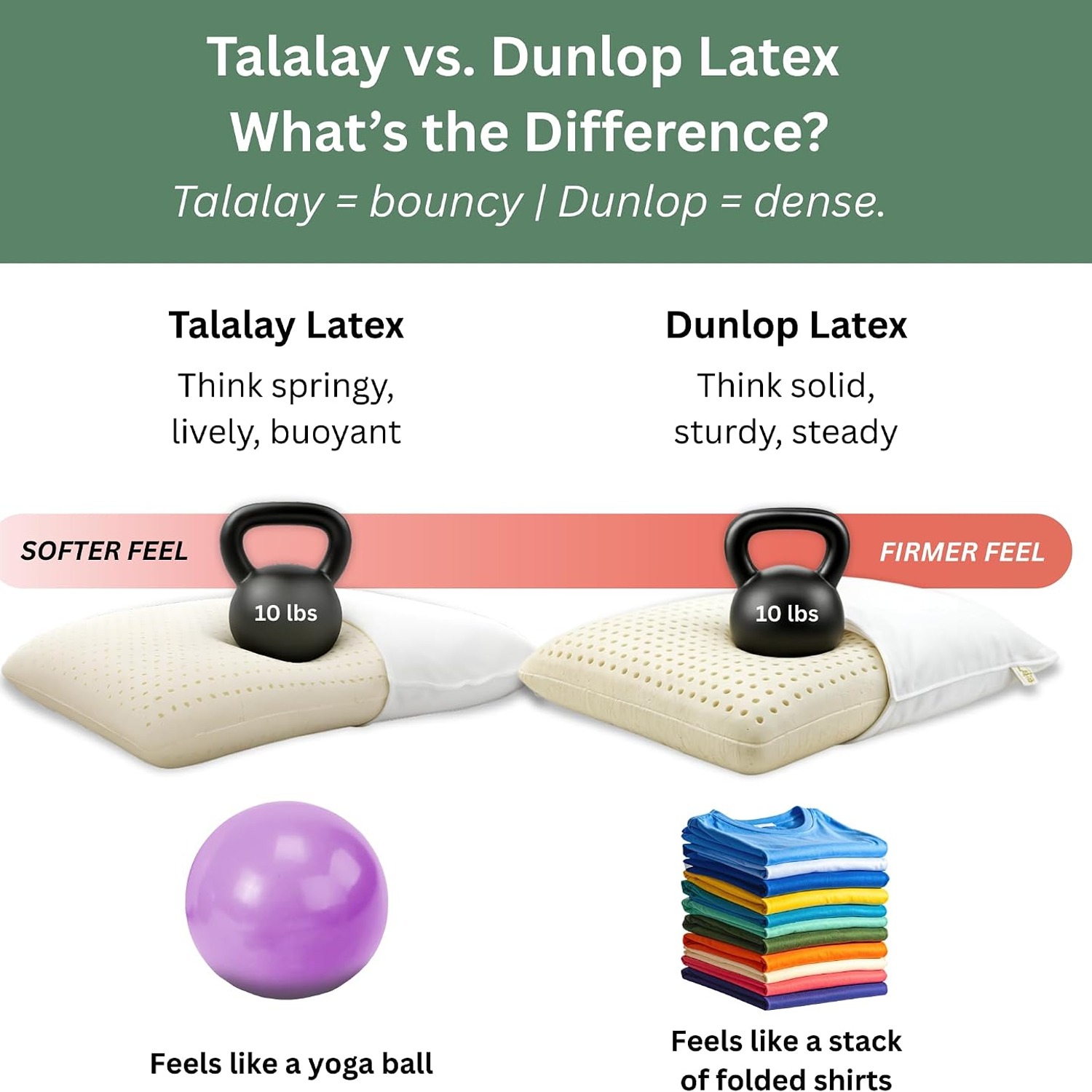
You will see two words attached to latex bedding, Dunlop and Talalay. Both start with liquid latex. The difference is what happens next.
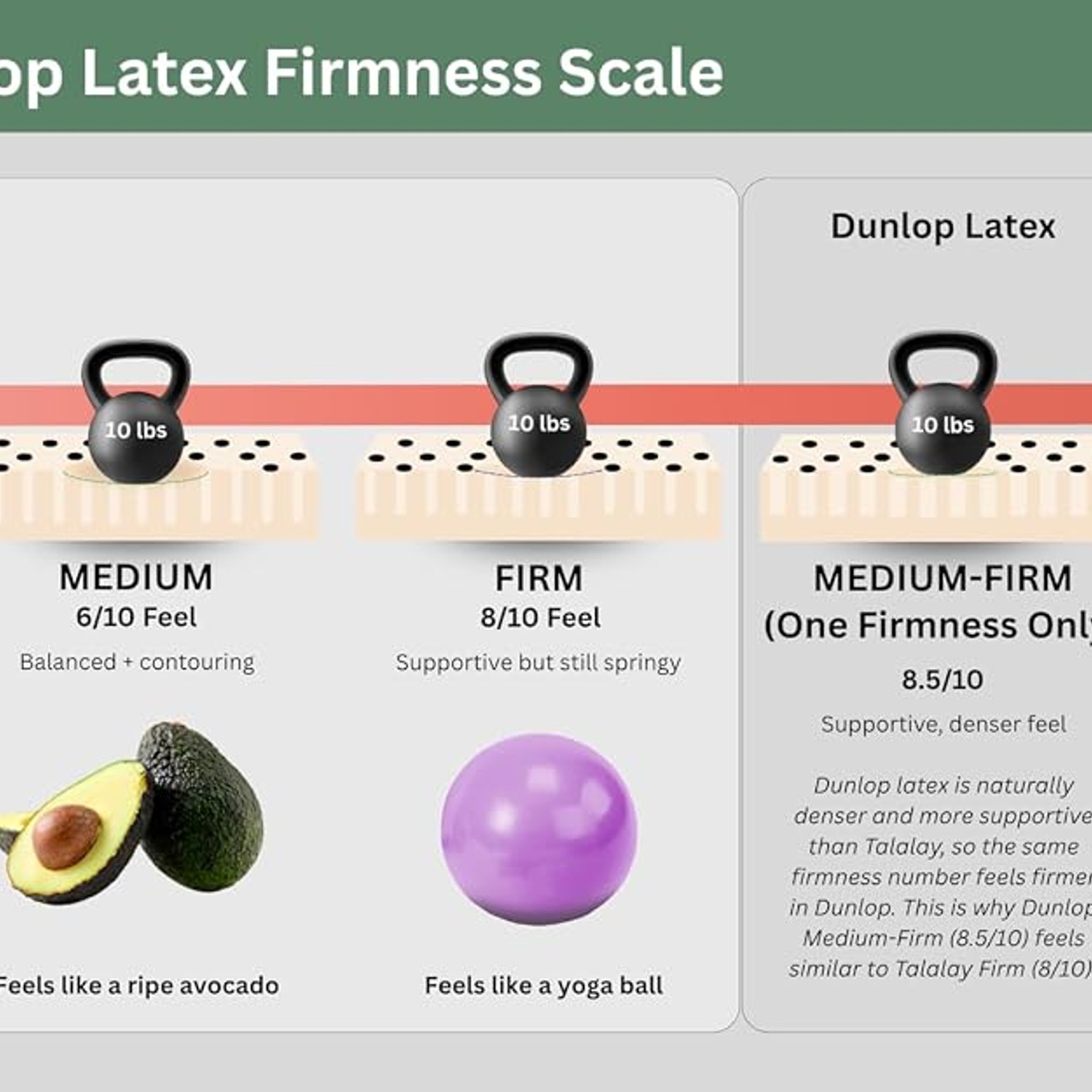
Dunlop latex is poured and cured in one go. Gravity pulls the heavier particles downward, so the finished block is denser at the bottom and firmer overall. It is tough and long lasting, and it is what you often find in mattress cores.
Talalay adds two steps. The mold is only partly filled, then sealed and vacuumed so the latex expands to fill the space. Then it is flash frozen before curing. Freezing locks the cell structure in place before anything can settle, so the finished foam is more even top to bottom, lighter, and springier.
For a pillow, that evenness is the point. You want the support under your ear to feel the same as the support under your temple. A Talalay core gives you that, with a soft initial give and then steady resistance underneath. It responds quickly when you turn, which is what people mean when they say latex feels "alive" compared with memory foam.
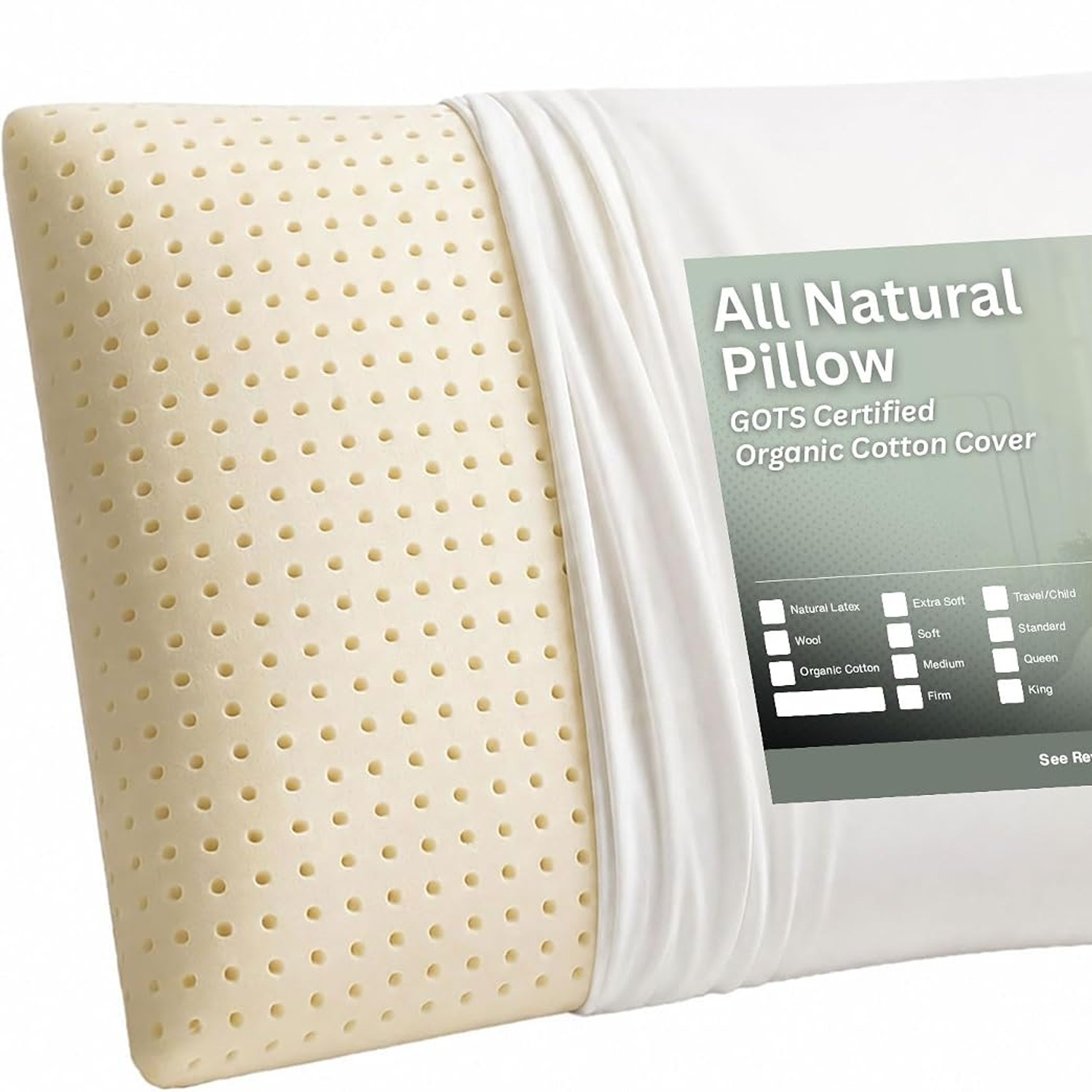
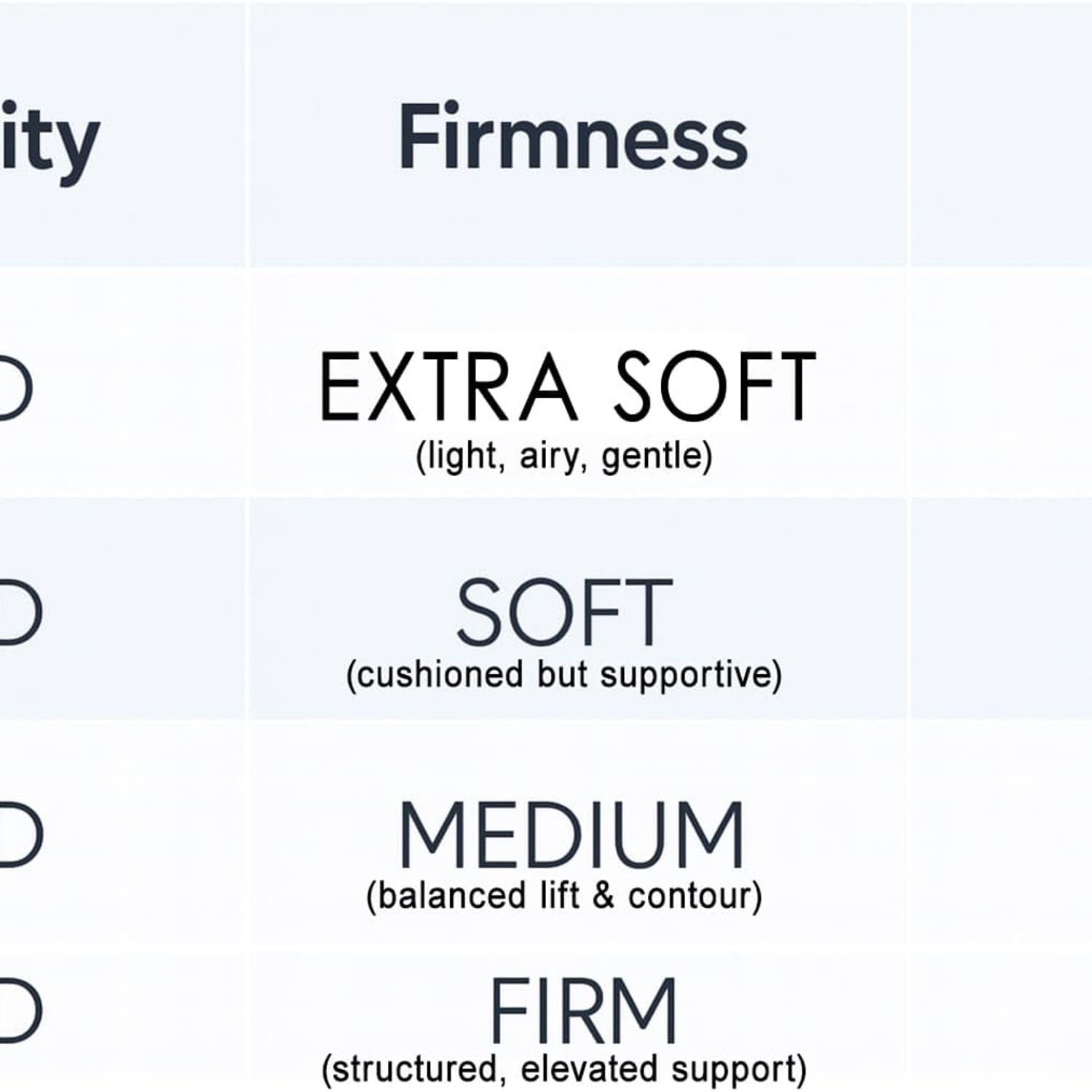
This pillow uses a 100% Talalay core at a medium firmness.
Why ventilation changes the feel
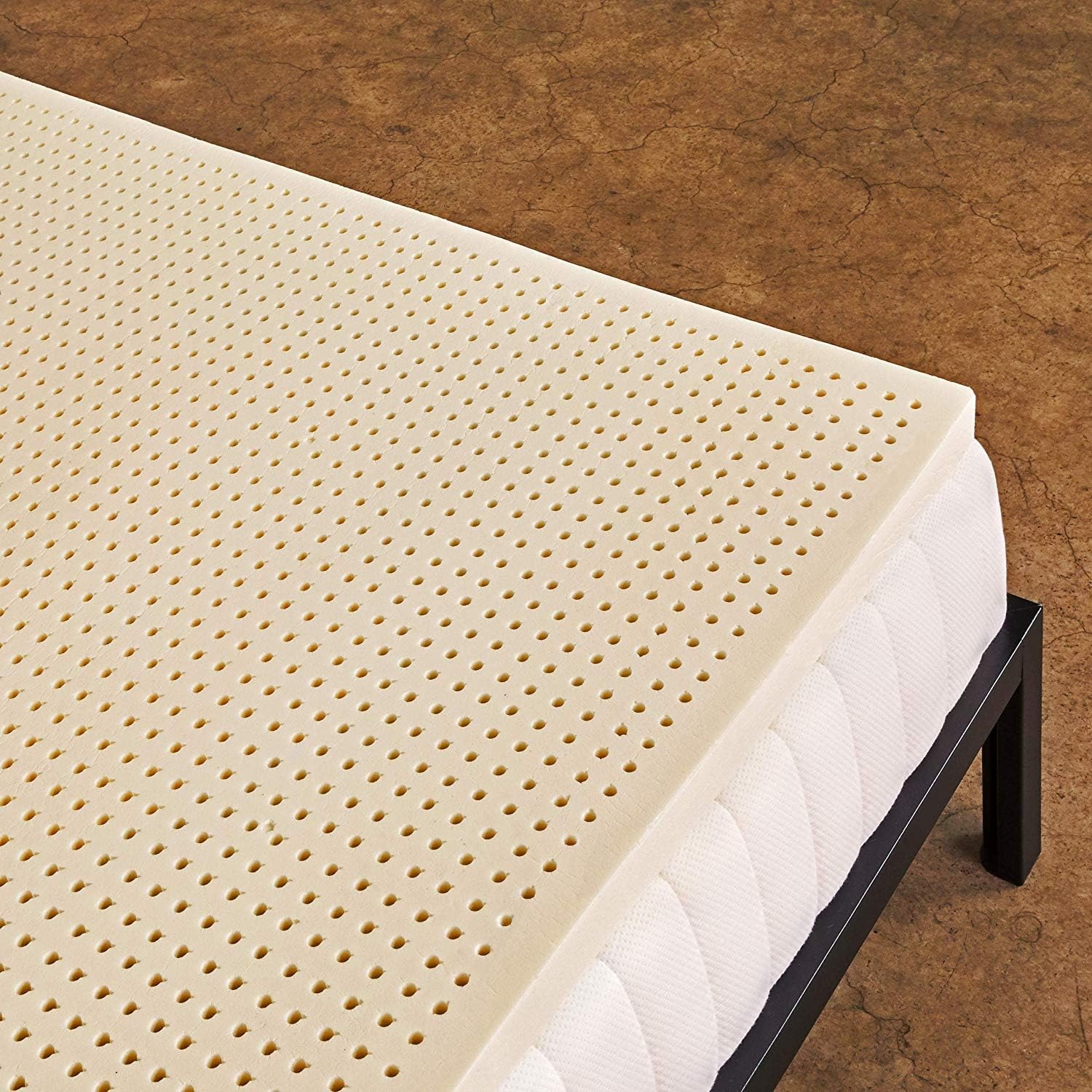
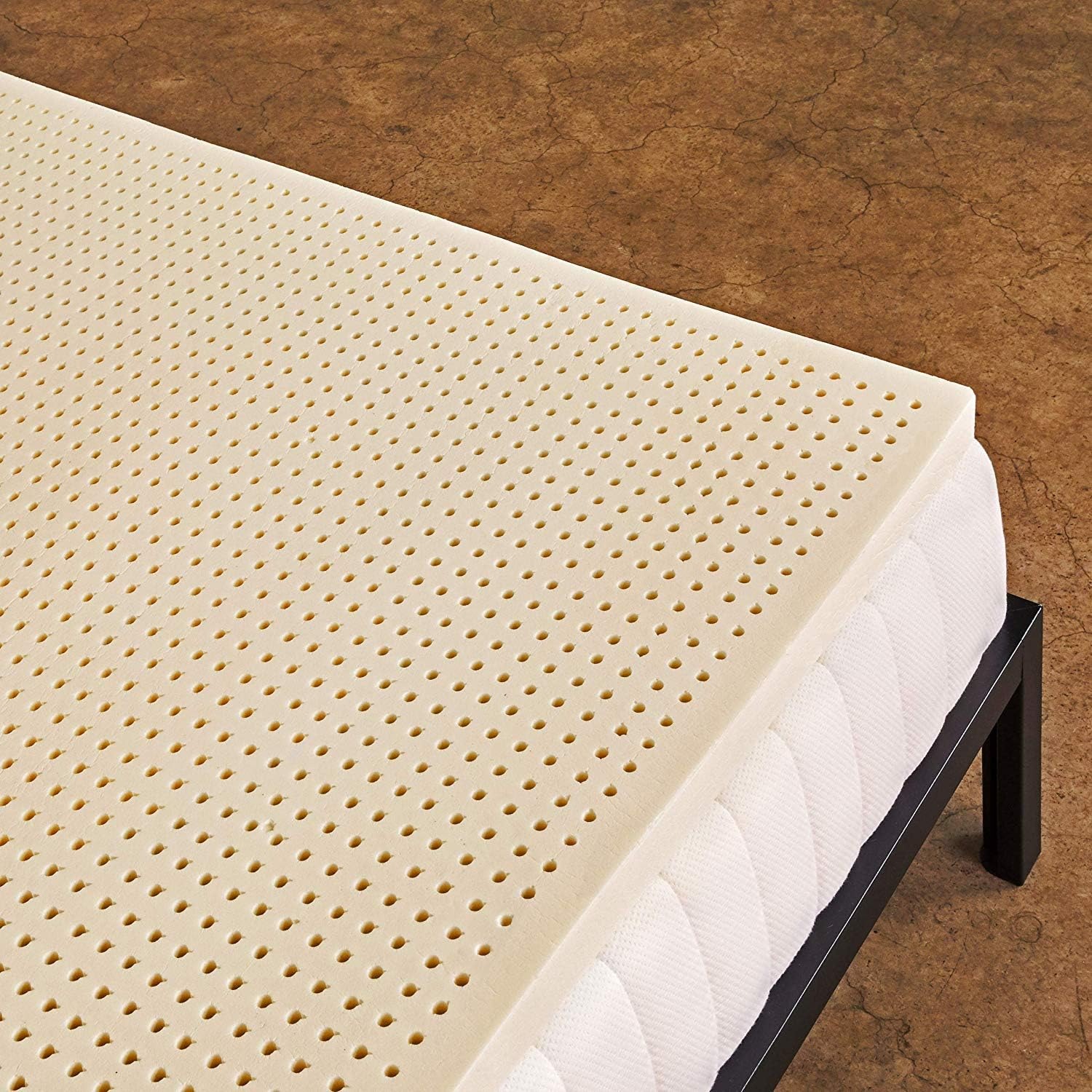
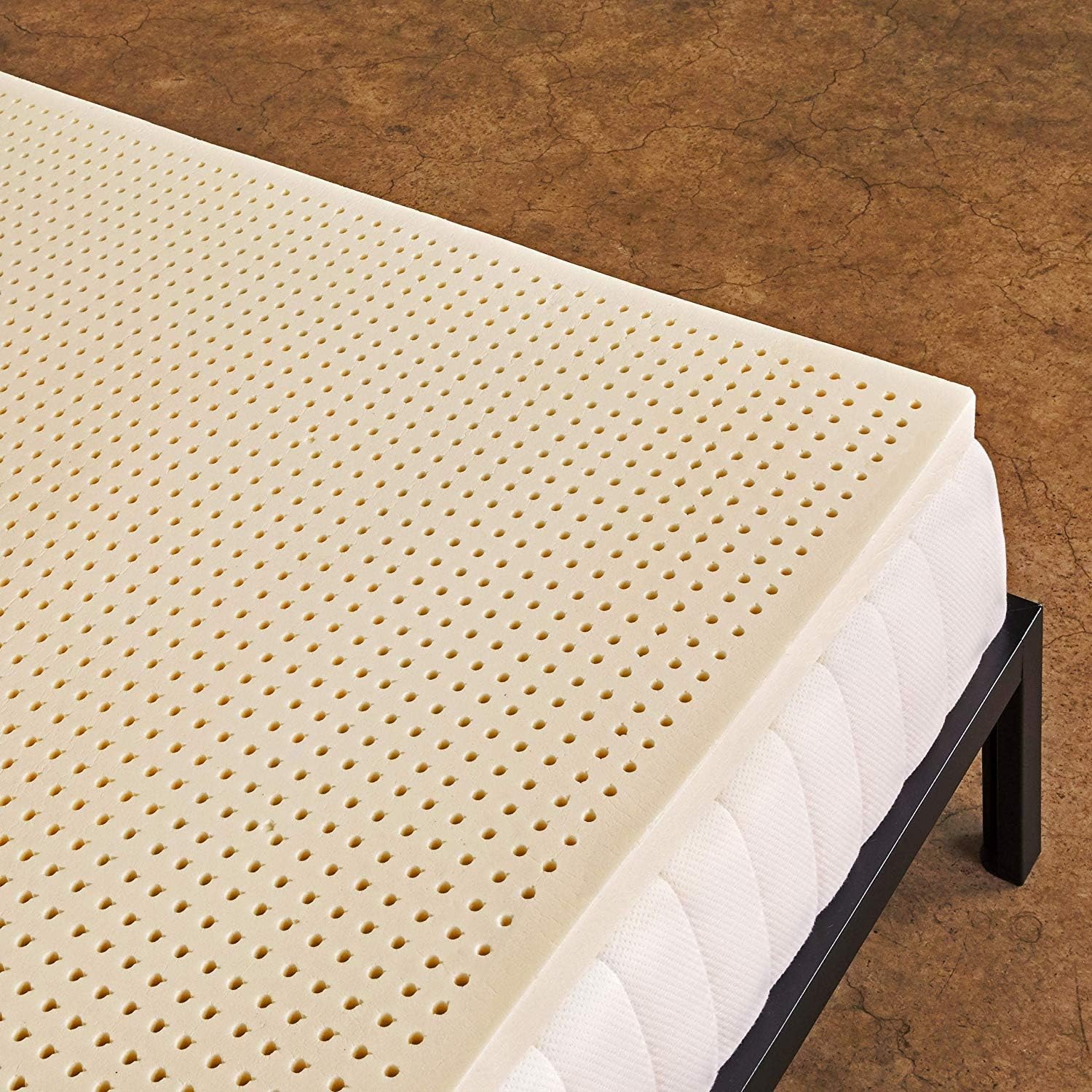
Solid foam of any kind can hold heat. The fix is to not make it fully solid. This core is pin-hole ventilated, meaning open channels run right through the latex rather than it being a sealed slab.
Two things happen. Air moves through the pillow as you shift position, so warm, humid air near your face gets pushed out instead of accumulating. And the holes slightly reduce the density of the core, which softens the initial feel without making the pillow collapse. The listing describes the pillow as both breathable and cooling, and the perforation is a big part of why.
If you are someone who flips the pillow looking for the cool side, ventilation is the feature to look for.
The cover, and why it is the bit you will actually touch
The core does the support work, but the cover is what your face spends the night against. This one is 100% organic cotton at 350 thread count, certified to the Global Organic Textile Standard, and it is hand finished at the maker's own facility in Orange County, California.
Thread count is often overhyped, but 350 in cotton is a sensible spot. Smooth enough to feel good, open enough to breathe. Sheeting that climbs much higher tends to get dense and warm, which works against the ventilation underneath.
The practical detail is the zipper. The cover comes off completely and goes through a normal wash cycle. This matters more than it sounds. A pillow you cannot clean slowly becomes a pillow you do not want, and natural materials deserve better than being thrown out because of a coffee spill.
What you must not do is put the latex core in a machine. Water and spin cycles tear latex apart. Keep the care split in your head, cover washes, core does not.
Picking the right loft for how you sleep
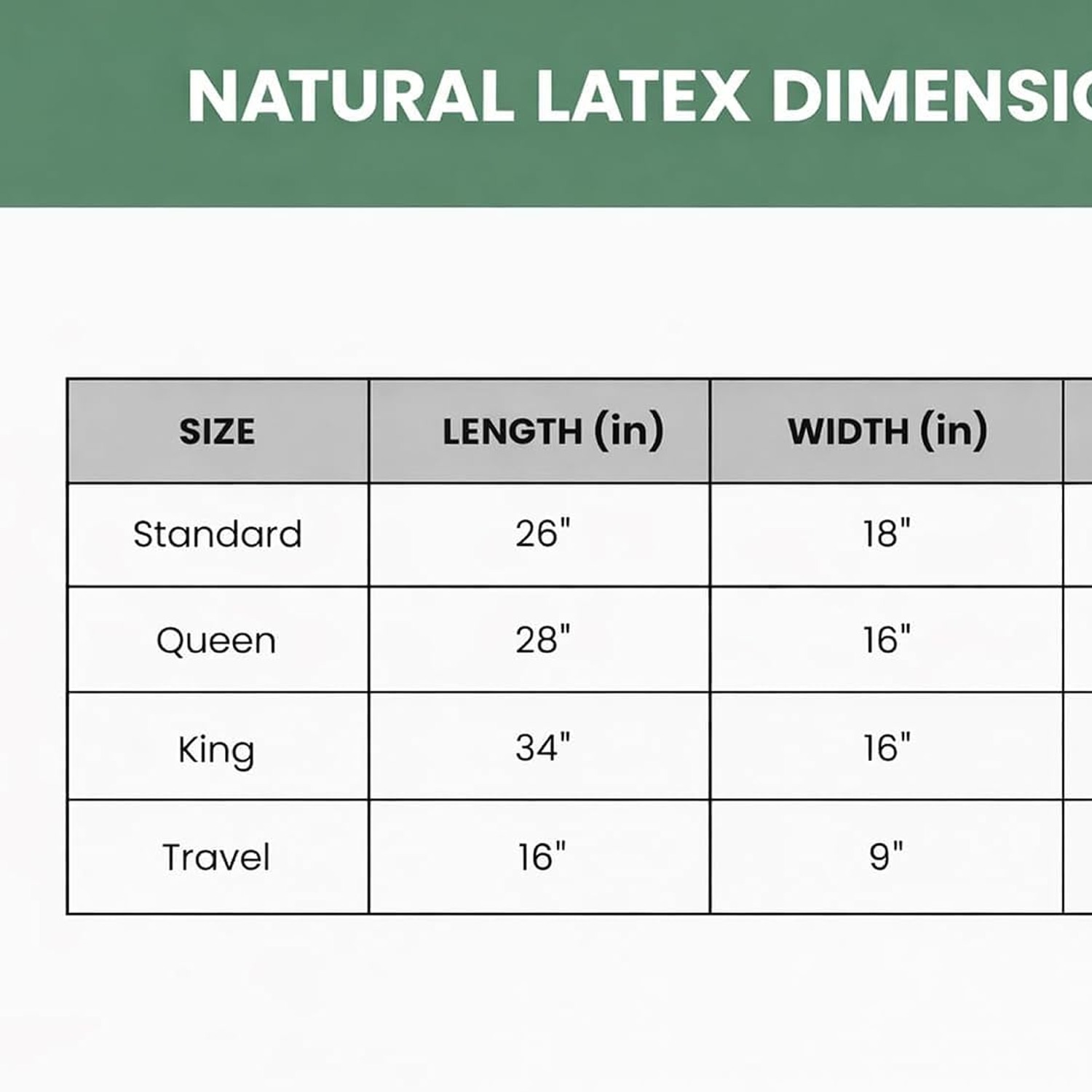
Loft is pillow height, and it is where most bad purchases happen. This pillow is 6 inches thick in king size, 34 inches long by 16 inches wide.
Side sleepers need the most height. When you lie on your side, there is a real gap between the outside of your shoulder and the side of your head, and the pillow has to fill it so your neck stays in line with your spine. Six inches of medium latex covers that gap for most adults. Broader shoulders may want more, smaller frames may want less.
Back sleepers need less. The gap between the back of your head and the mattress is smaller than the shoulder gap. A medium 6 inch latex pillow usually works here because latex compresses under the weight of your head rather than staying at full height, so the effective loft when you are lying on it is less than the number on the spec sheet.
Stomach sleepers generally want the least height of anyone. The listing includes stomach sleepers in its recommended uses, and plenty of front sleepers do fine on medium latex because of that compression. But if you sleep face down almost exclusively, be honest with yourself about whether 6 inches is going to be too much.
Multi-position sleepers, which is most of us, are the group this kind of pillow suits best. A medium core is a compromise by design, and the king length means you stay on support when you roll rather than sliding off the edge.
Why king size is worth considering
The jump from standard to king is 8 inches of extra length, and it is more useful than it sounds.
If you move around at night, you have more pillow to move onto. If you read in bed, a king pillow gives you something to lean against that does not fold in half. On a king or super king mattress, two king pillows span the bed properly, which is a visual thing but a real one.
The trade-off is that you need king pillowcases, and because this pillow is 6 inches thick, a very tight case will squash the loft you paid for. Look for cases with a bit of room in them.
Looking after it
Latex has two enemies, heat and UV light. Both break down the rubber over time, making it crumbly at the edges. So keep the pillow out of direct sunlight, and do not dry it on a radiator or in a tumble dryer.
Wash the cotton cover when it needs it, following the care label. Use a pillow protector underneath your pillowcase if you want to stretch the gap between washes, which also keeps body oils off the organic cotton.
If the pillow smells faintly rubbery when it arrives, that is normal for natural latex. Air it in a ventilated room, out of the sun, and it fades. Spot clean the core only if you have to, with a barely damp cloth and a light touch.
Done sensibly, a latex core outlasts most other pillow types by a comfortable margin, because there is no loose fill in there to break down.
Who this is not for
Two groups should look elsewhere. Anyone with a diagnosed latex allergy should not buy a latex pillow, full stop. Natural latex contains proteins that can cause reactions, and no amount of cover fabric changes that.
And anyone who genuinely loves a flat, squashy, fold-it-under-your-head pillow will find latex too structured. It does not compress down to nothing. That is the whole appeal for most people, but it is a real mismatch if a thin pillow is what your neck has learned to like.
The short version
This is a king size pillow with a 100% Talalay latex core, pin-hole ventilated, at medium firmness, measuring 34 by 16 inches and 6 inches thick. The cover is 350 thread count GOTS certified organic cotton, hand finished in California, and it unzips for machine washing. The core does not go in the machine.
It suits side and back sleepers most naturally, works for multi-position sleepers, and is listed as suitable for stomach sleepers too, though front sleepers should consider whether 6 inches is more loft than they want. Latex resists dust mites and mold, and the ventilation keeps it from running hot.
If your current pillow needs folding, punching or flipping to work, a solid latex core is the straightforward fix. Give any new pillow a week before you judge it. Your neck needs a few nights to recalibrate.