
The complete guide
How to Choose a Talalay Latex Pillow Without Guessing
The problem with the pillow you already own
Most people replace a pillow far too late. It happens quietly. The pillow slowly flattens, your head sinks another centimeter each month, and the stiff neck you wake up with becomes just a thing your body does now. You blame the mattress, or your desk chair, or your age.
Then you sleep somewhere else for a night, on a pillow that actually holds your head up, and your neck feels fine in the morning. That is the moment people start shopping.
A talalay latex pillow is the usual answer for anyone tired of the flattening cycle. Latex foam springs back. You lie on it, it compresses, you get up, it returns. That is the whole pitch, and it is a better pitch than it sounds, because almost every other fill material fails in exactly the way latex does not.
How latex foam actually works
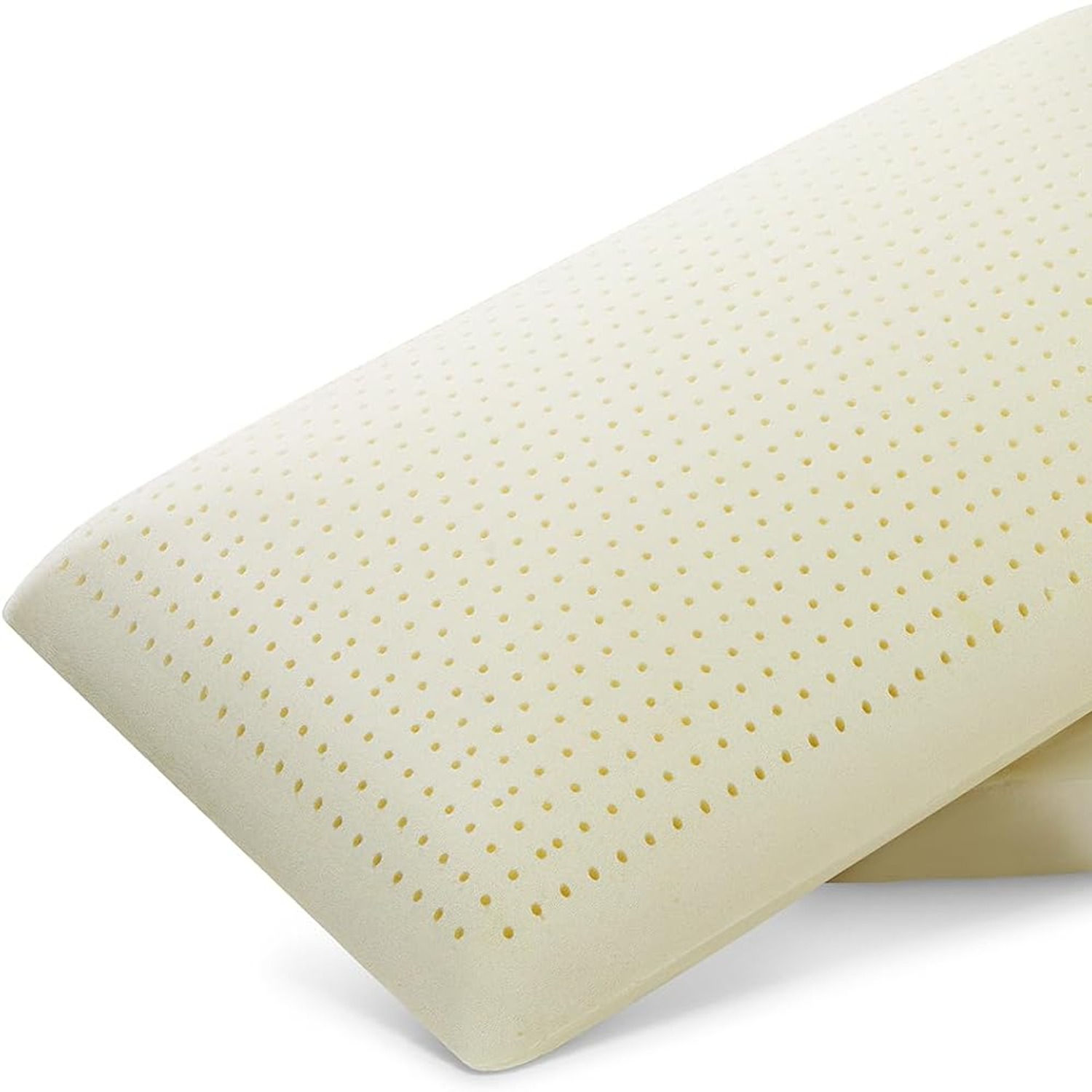
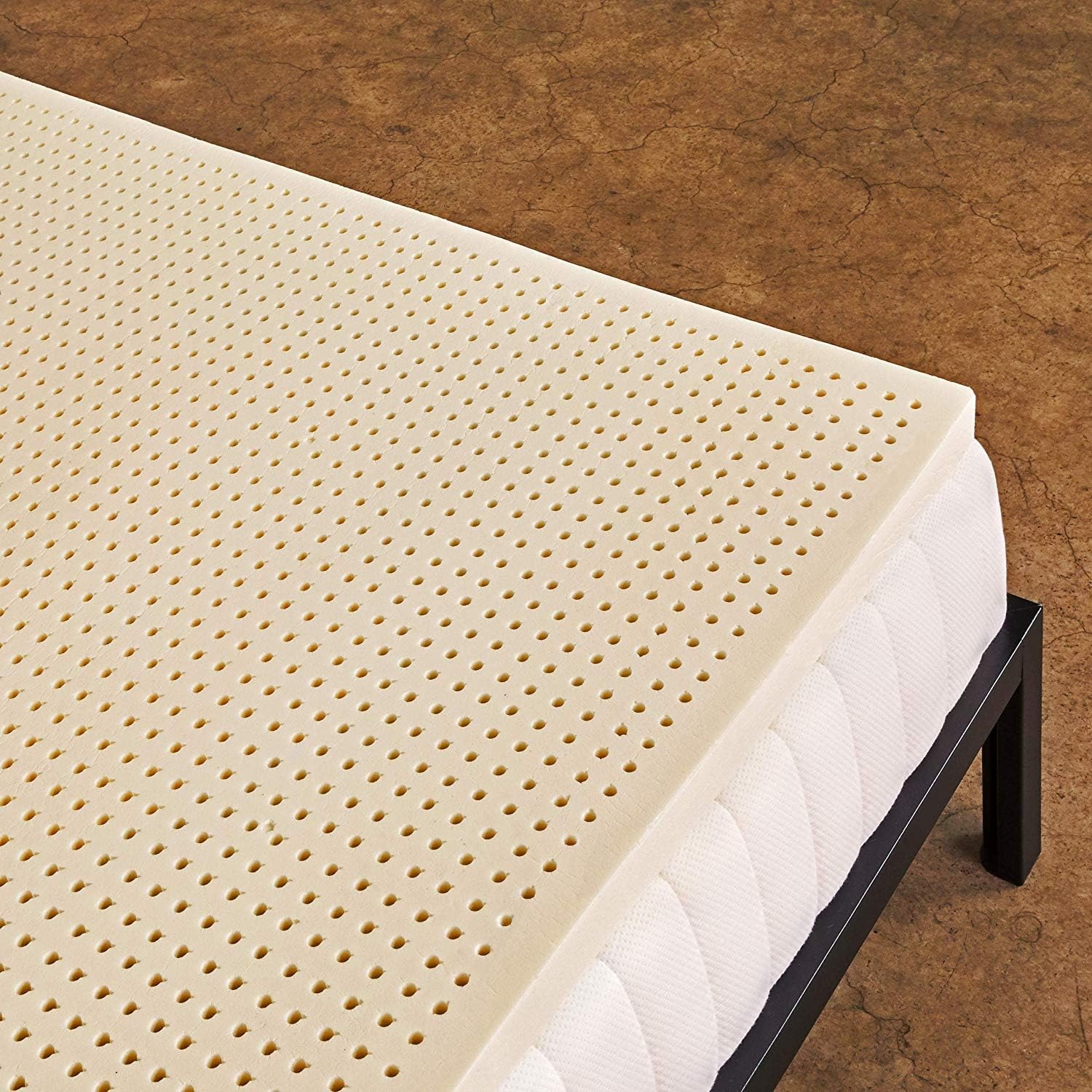
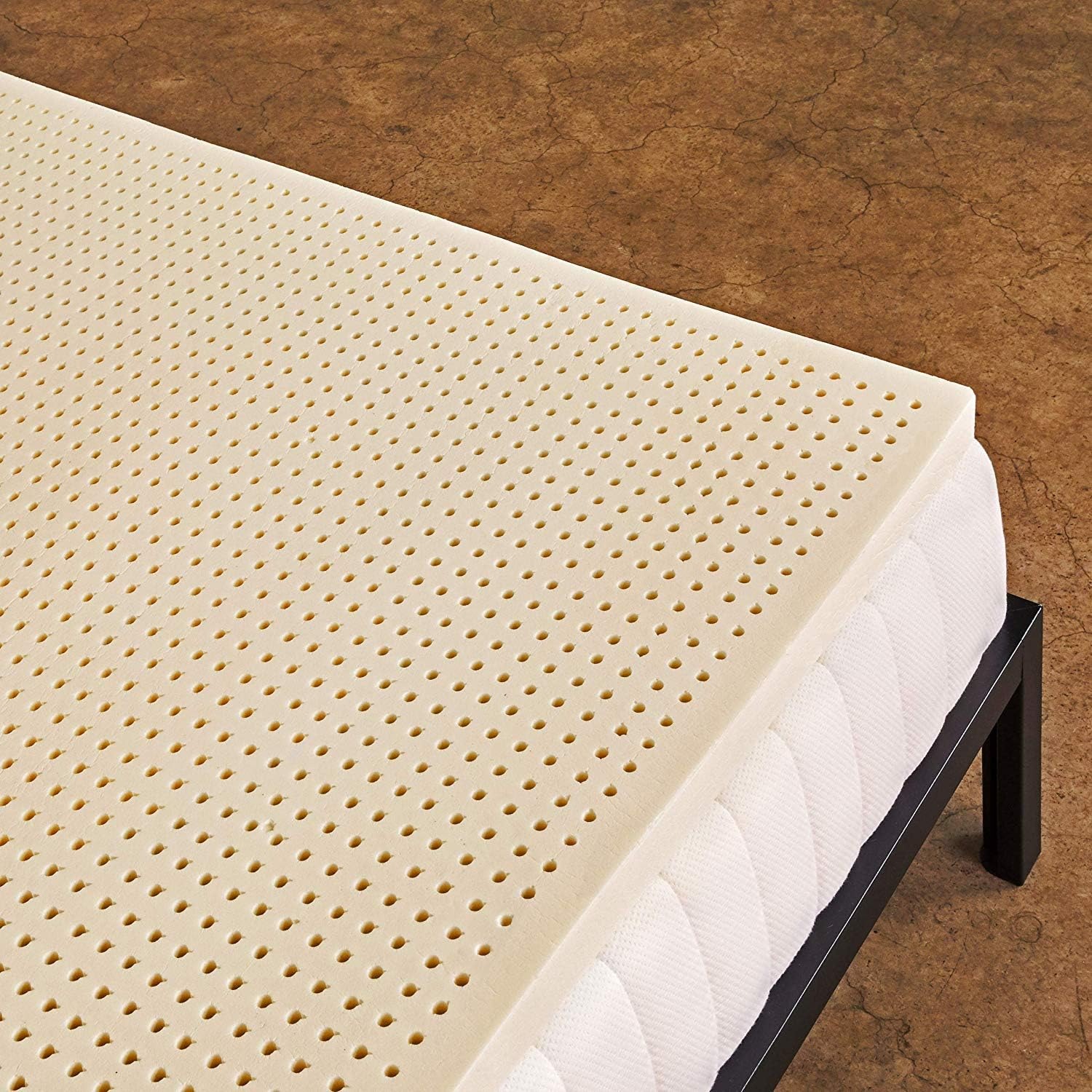
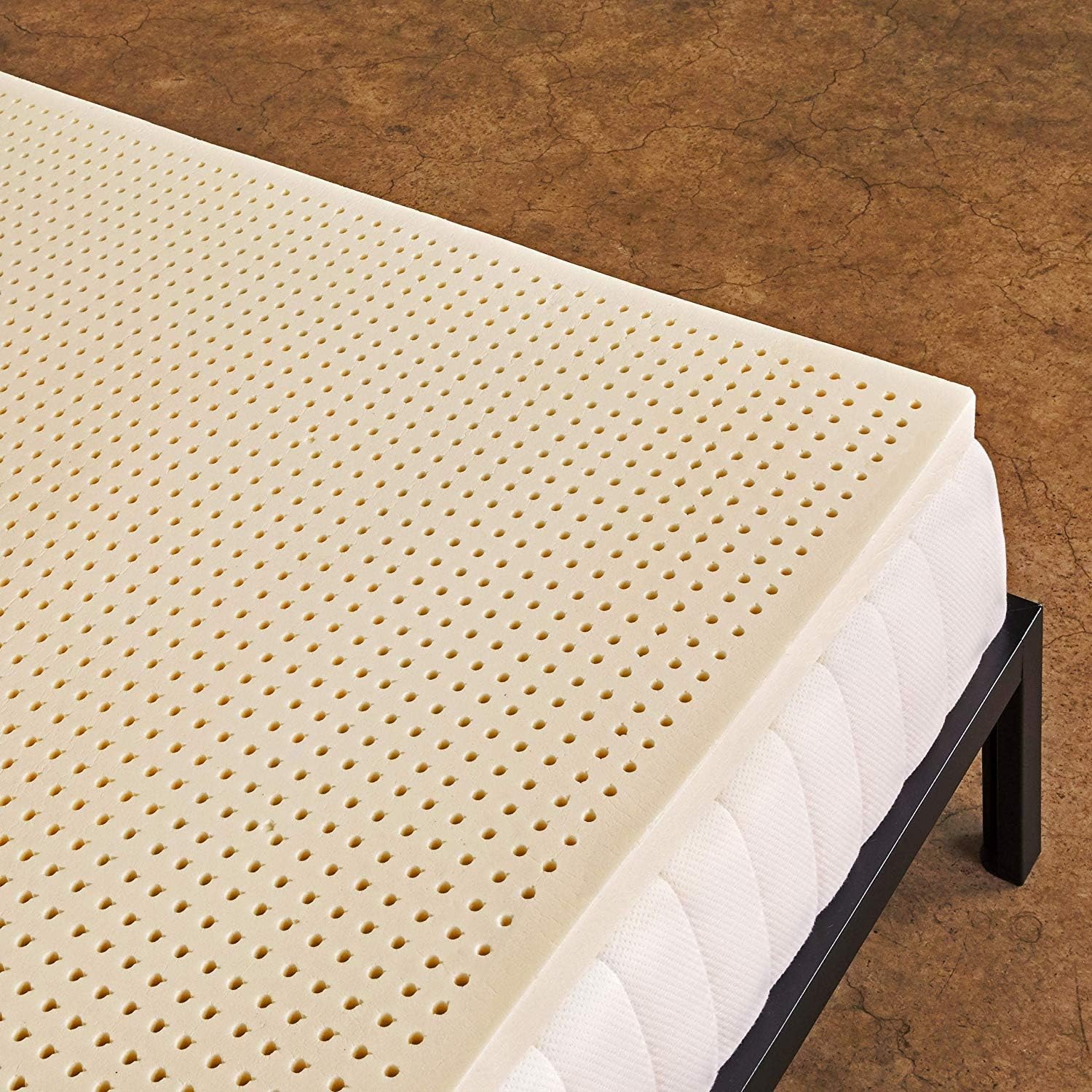
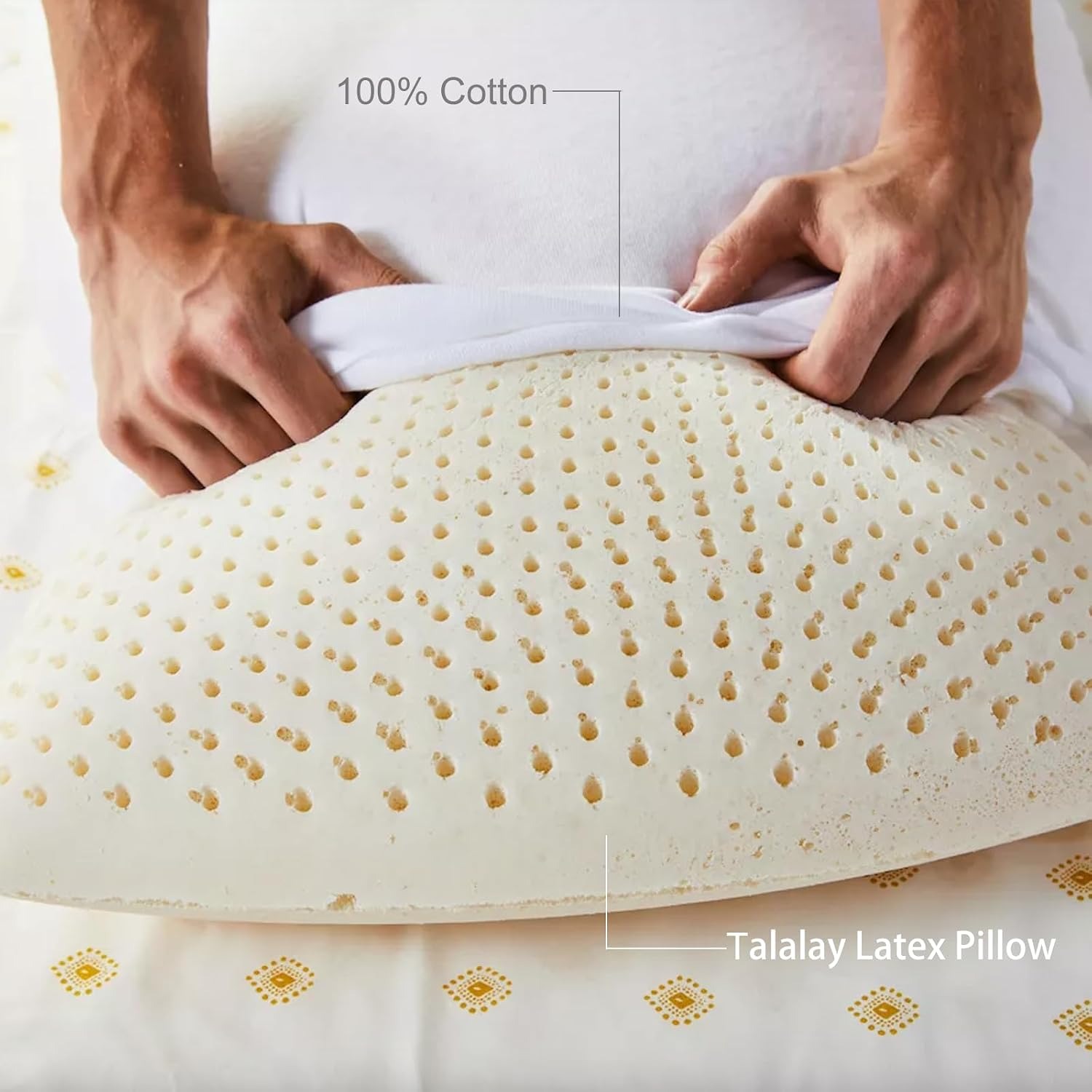
Latex foam is made from a liquid that gets whipped, poured into a mold and set. The Talalay process adds a vacuum step and a freezing step before the foam cures. Those extra stages spread the air bubbles out more evenly, so the finished foam has a consistent, open internal structure from one side of the pillow to the other.
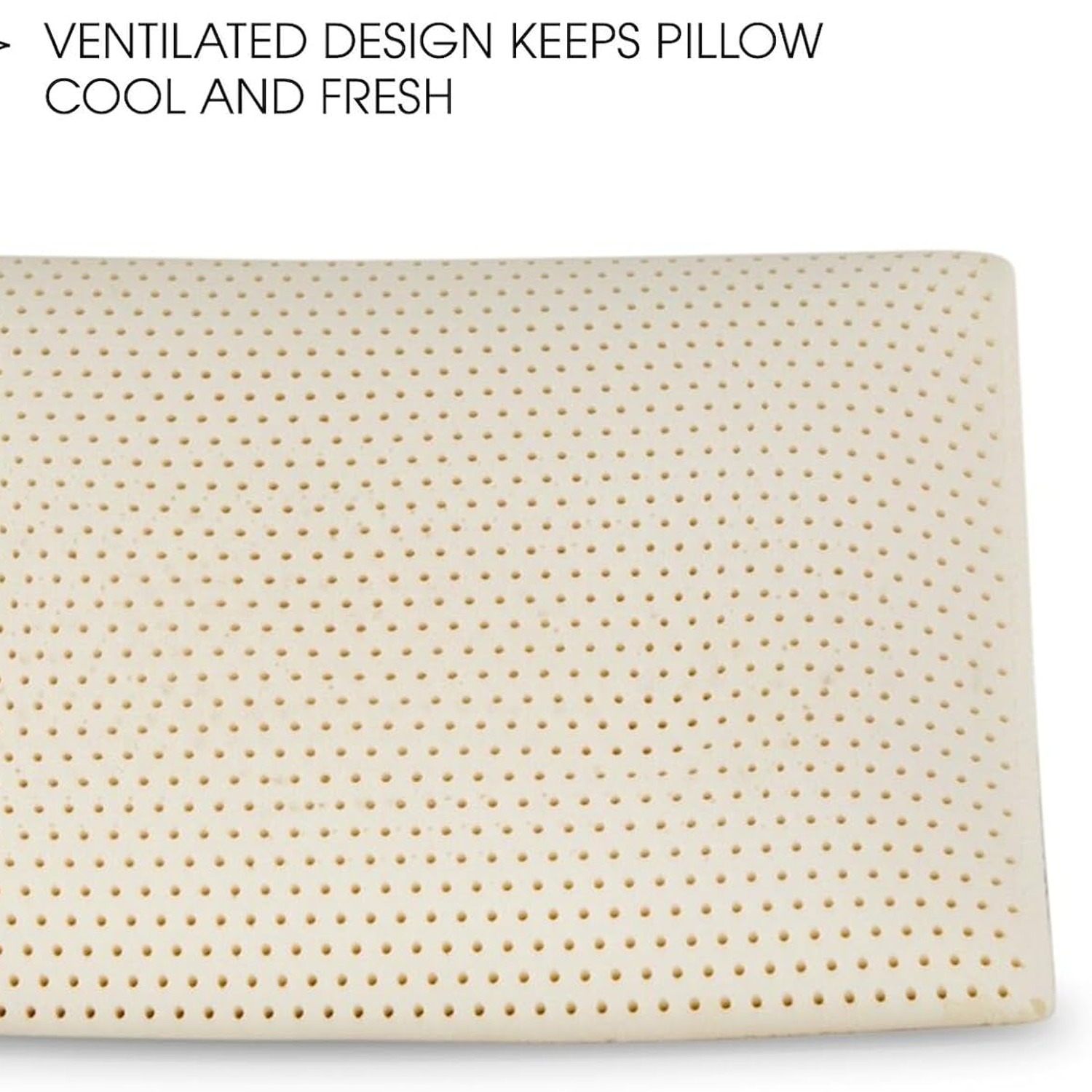
Two things follow from that. First, the support feels the same wherever your head lands. There is no soft spot in the middle and no firm ridge at the edge. Second, air can move through the material. Dense foams trap body heat against your head, which is why so many people flip their pillow looking for a cold side. An open structure gives that heat somewhere to go. This pillow lists cooling among its features and describes the material as breathable.
The other quality latex brings is responsiveness. Memory foam sinks slowly and stays sunk until you move. Latex pushes back right away. Some people love that buoyant feel and some find it too lively. If you have only ever slept on down or memory foam, it is worth knowing in advance that latex is a different sensation, not just a firmer version of what you have.
Loft and firmness, explained properly
These two words get used interchangeably and they are not the same thing.
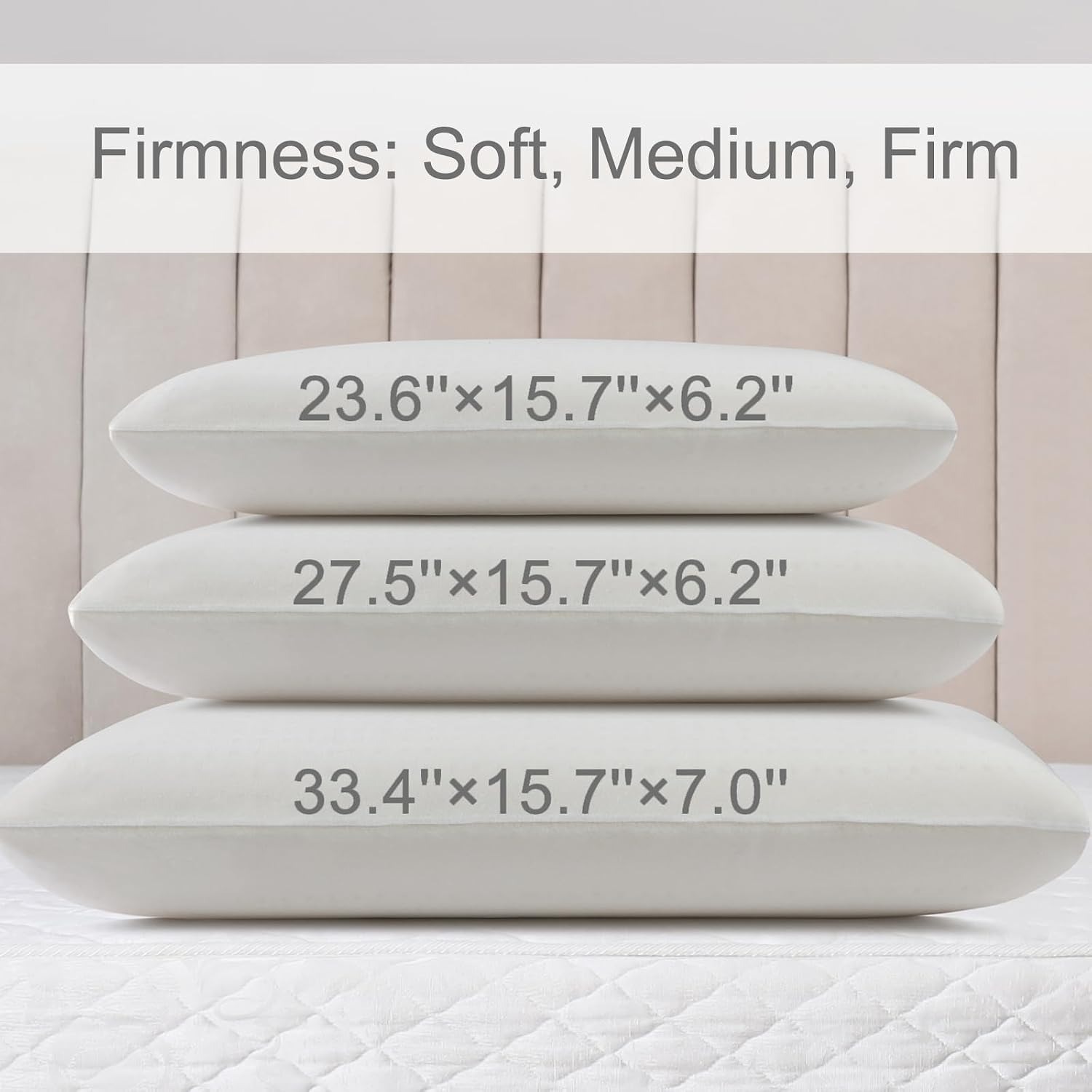
Loft is height. This pillow is 6 inches thick, which the manufacturer calls mid loft. Firmness is how much it resists being squashed. This one is rated medium.
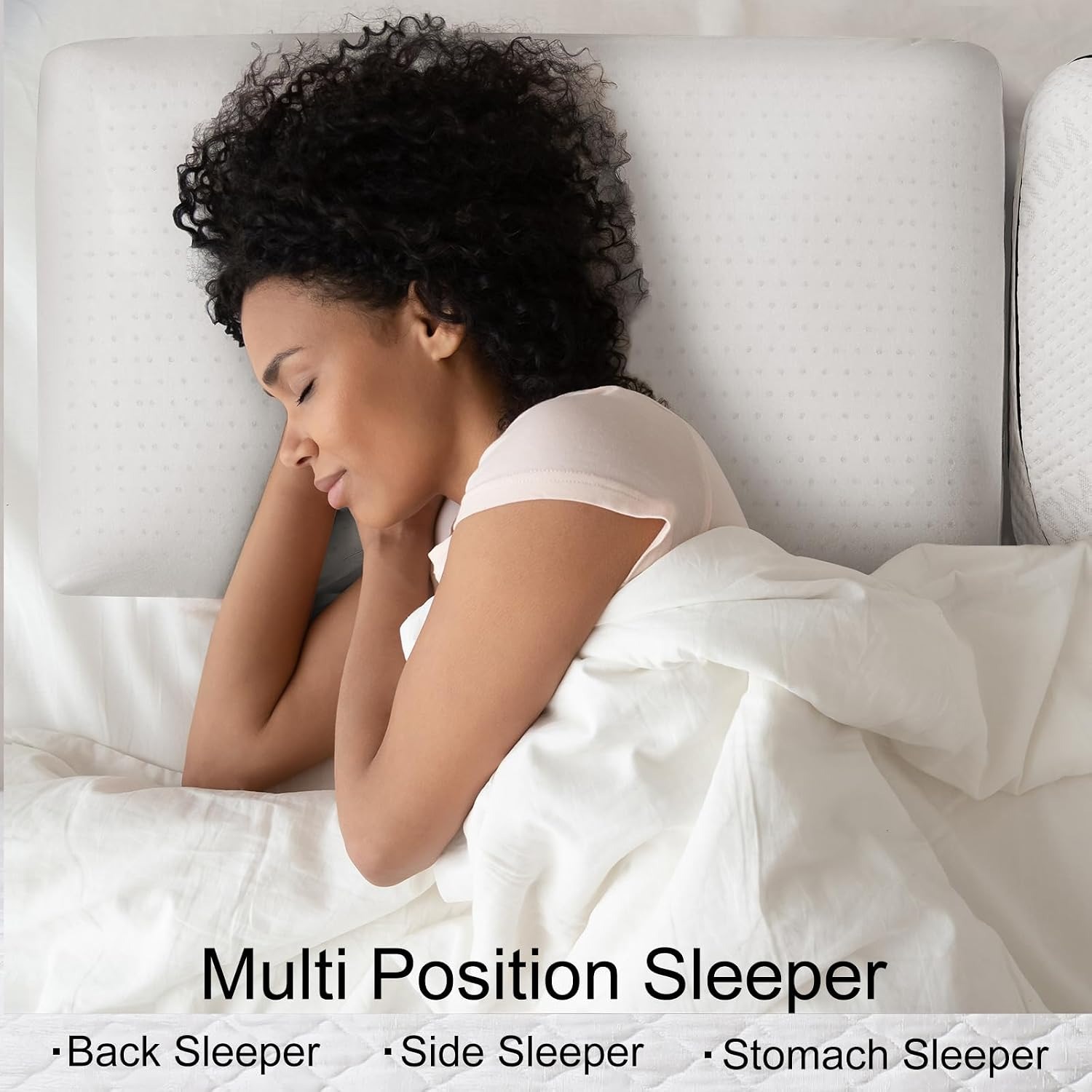
Your sleeping position decides the loft you need. When you lie on your side, there is a real gap between the mattress and your head, because your shoulder props everything up. A taller pillow fills that gap and keeps your neck in line with your spine. When you lie on your back, the gap is much smaller, so a tall pillow pushes your chin toward your chest.
That is why 6 inches is a genuinely useful number. It sits at the top of the range most back sleepers get on with and the bottom of the range most side sleepers want. If you switch positions through the night, which most people do, a mid loft pillow stops you from being badly wrong in either position. If you are a committed side sleeper with broad shoulders, you may eventually want more height. If you sleep on your stomach, this will almost certainly be too tall.
Firmness is more about preference, though it interacts with loft. A soft pillow at 6 inches will compress to maybe 4 inches once your head is on it. A medium firm pillow holds closer to its stated height. That is worth remembering when you compare numbers between brands, because a stated loft only means something alongside a stated firmness.
Who this suits, and who it does not
This is a good fit if you sleep on your side or your back, you run warm at night, and you are sick of pillows that go flat. It is also a sensible choice if you are buying without being able to test, because medium firmness is the least risky setting. Most people who do not know what they want end up happy on medium.
It is a poor fit if you sleep face down, if you like a pillow you can scrunch and fold under your head, or if you have a latex allergy. Latex does not scrunch. It is one solid piece of foam and it will not let you build a nest out of it.
It is also worth being honest about the adjustment period. If your current pillow has slowly flattened over three years, a properly supportive pillow will feel high and strange for the first few nights. That feeling usually settles within a week or two as your neck gets used to being held in a neutral position rather than drooping. Judge it by how your neck feels at seven in the morning, not by how the pillow feels at eleven at night.
Living with it day to day
The care side is simple, but you do need to follow it.
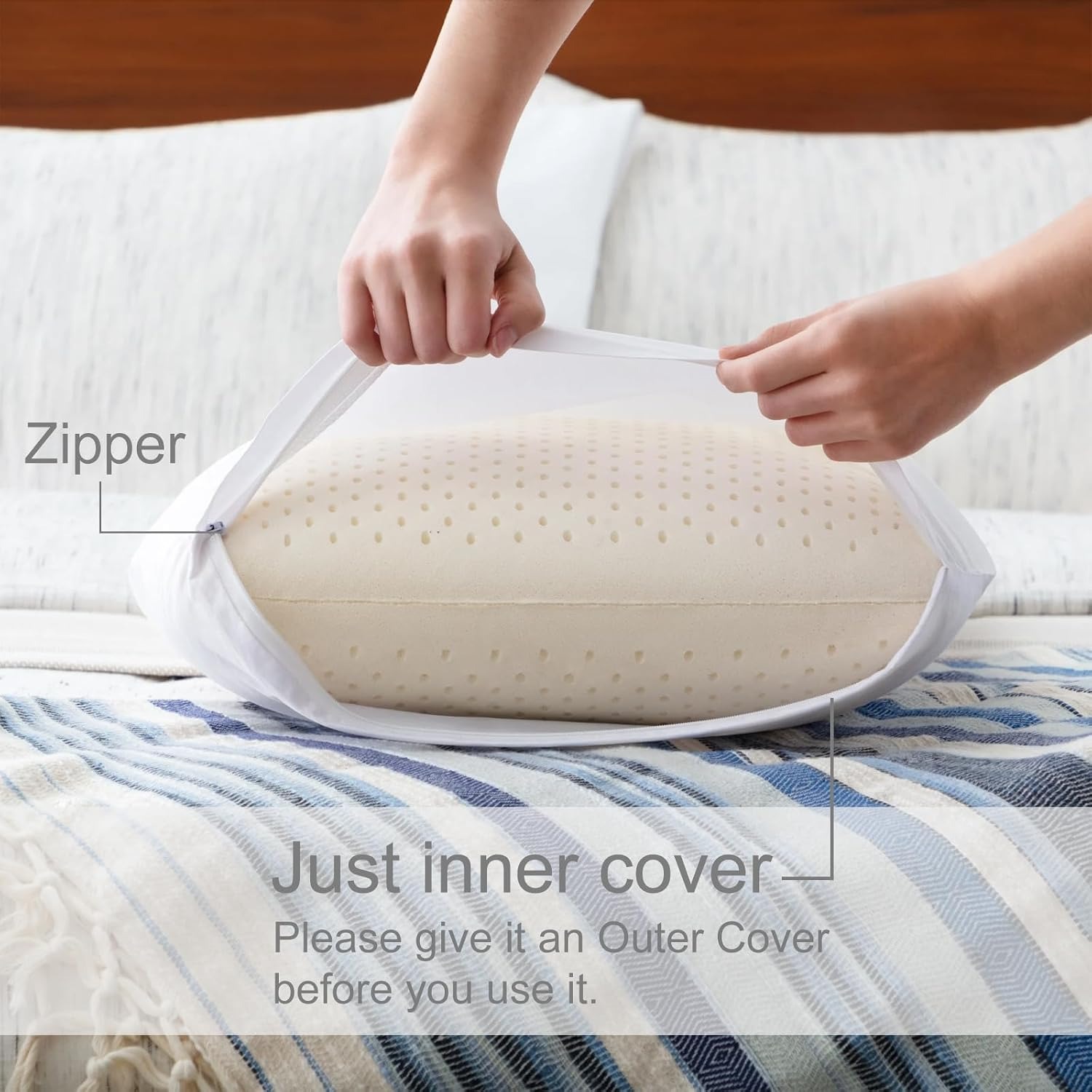
The cotton cover zips off and gets washed. That is the part that absorbs sweat and skin oil, so wash it as often as you wash your sheets. The latex core underneath does not go in the machine. If it needs attention, spot clean it and let it dry in open air, away from a window.
Sunlight is the one real enemy. Heat and UV break latex down over time and make it brittle at the edges. The same applies to tumble dryers, radiators and hot cars. Shade and moving air are all the core needs.
Do not store it folded or crushed under heavy bedding for long periods either. Latex recovers from nightly use happily, but months of being compressed in a cupboard is a different kind of load.
New latex has a faint natural smell. It is normal and it fades. Take the core out of the cover, leave it somewhere with a bit of airflow for a few days, and give it a gentle two minute press with both hands to restore it to full size after being packed for shipping.
A few things worth comparing
When you line this up against other options, a handful of points decide it.
Down pillows feel wonderful for a few months and then need daily reshaping. They also hold warmth, which is lovely in winter and awful in summer. Polyester is cheap and goes lumpy fast. Memory foam gives you contouring but often traps heat and has a slow, sinking response that not everyone likes.
Latex sits apart from those because it combines support with airflow. The trade-offs are weight and price. At around 3 pounds, a latex pillow is heavier than what you are used to lifting. And latex costs more up front, because the material is more expensive to produce. The counterargument is lifespan. A pillow you keep for years works out cheaper than two cheap ones a year.
The short version
This is a standard size pillow, 23 by 15 inches, 6 inches thick, filled with 100% Talalay latex and rated medium firmness. It has a washable cotton cover and the material is described as breathable, durable, hypoallergenic and natural, with cooling listed as a feature.
Buy it if you sleep on your side or back, you want support that stays put, and you are done with pillows that flatten. Skip it if you sleep on your stomach, you prefer something you can fold and bunch, or latex does not agree with you.
Give it a fortnight before you make up your mind, keep the cover clean, and keep the core out of the sun. Do that and it should outlast several of whatever you are sleeping on now.