


The complete guide
Low Loft Latex Pillows, A Practical Buyer's Guide
The problem with pillows that are too tall
Walk into most shops and the pillows on display are built for one kind of sleeper: the side sleeper. That makes sense, since side sleeping is the most common position. The trouble is that everyone else gets handed the same tall, chunky pillow and told to make it work.
If you sleep on your front, a thick pillow pushes your head up and back while your chest stays flat on the mattress. Your neck ends up bent at an angle it was never meant to hold for seven hours. Back sleepers have a milder version of the same problem. The head gets tipped forward, the chin drifts toward the chest, and the muscles at the base of the skull spend all night doing low-level work.
You often do not notice it while you are asleep. You notice it at 7am, when turning your head to check the clock feels stiff. Or you notice it because you keep waking up with your pillow shoved aside and your head directly on the mattress, which is your body quietly telling you what height it actually wanted.
A low loft pillow fixes the geometry. At around 5 inches, this one keeps the head much closer to the mattress plane so the neck stays in a gentler line with the rest of the spine.
How a latex core behaves
Not all low pillows are equal. A thin polyester pillow is low because there is not much in it, and within a few months it compresses to almost nothing. A latex core is a different thing entirely.
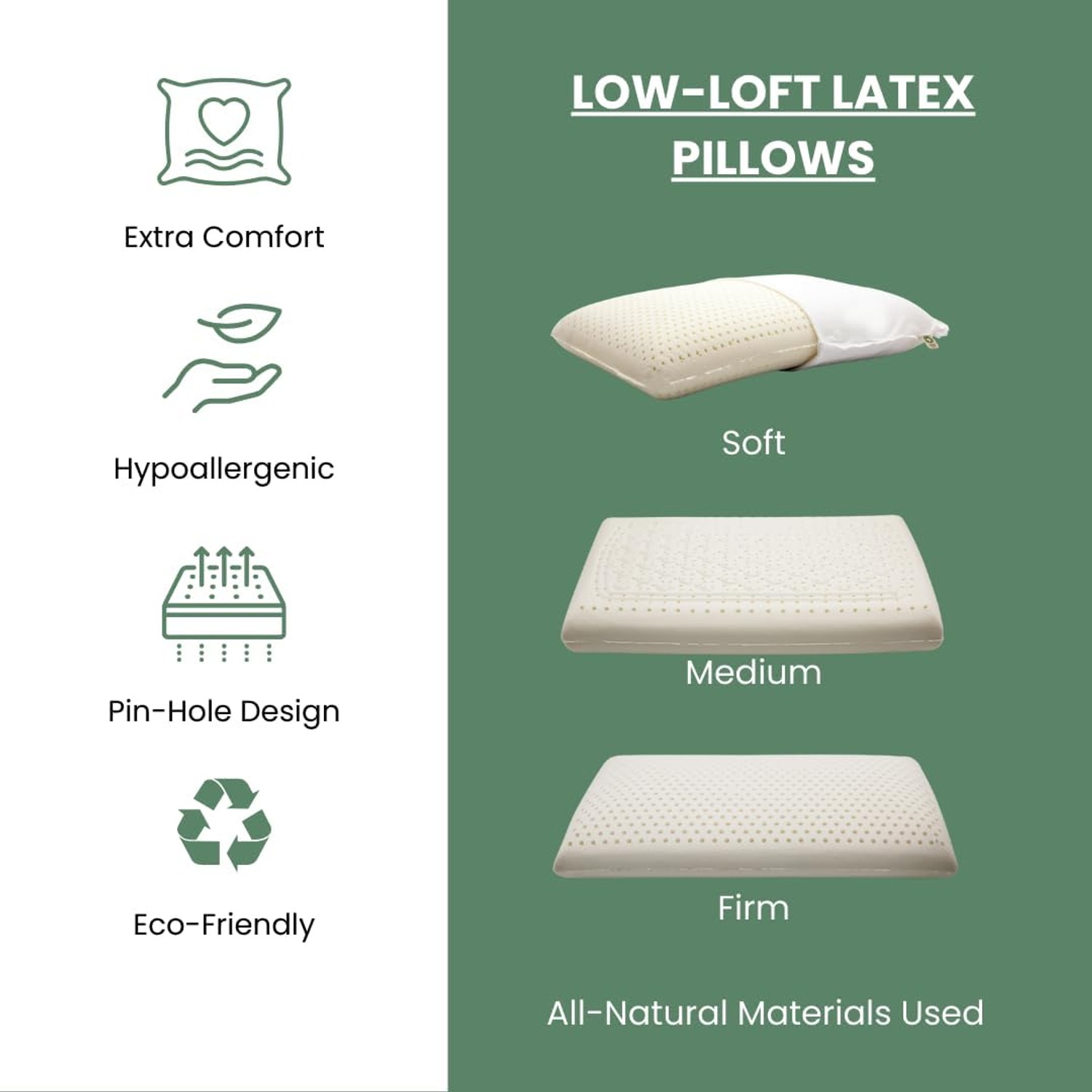
Latex is a molded material with real bounce. Press your palm into it and it pushes back straight away, then returns to its original shape the moment you lift off. That responsiveness is why the feel is often described as supportive rather than soft, even when the firmness rating says soft, as it does here.
The practical benefit is consistency. The pillow you sleep on in month ten should feel close to the pillow you slept on in week one. There is no fluffing ritual, no shaking the fill back into the corners, no gradual slide into a pancake. The core weighs 3 pounds, which is heavier than a fiber pillow of the same size and is a reasonable sign of a solid, dense core rather than an airy one.
Ventilation and why holes matter
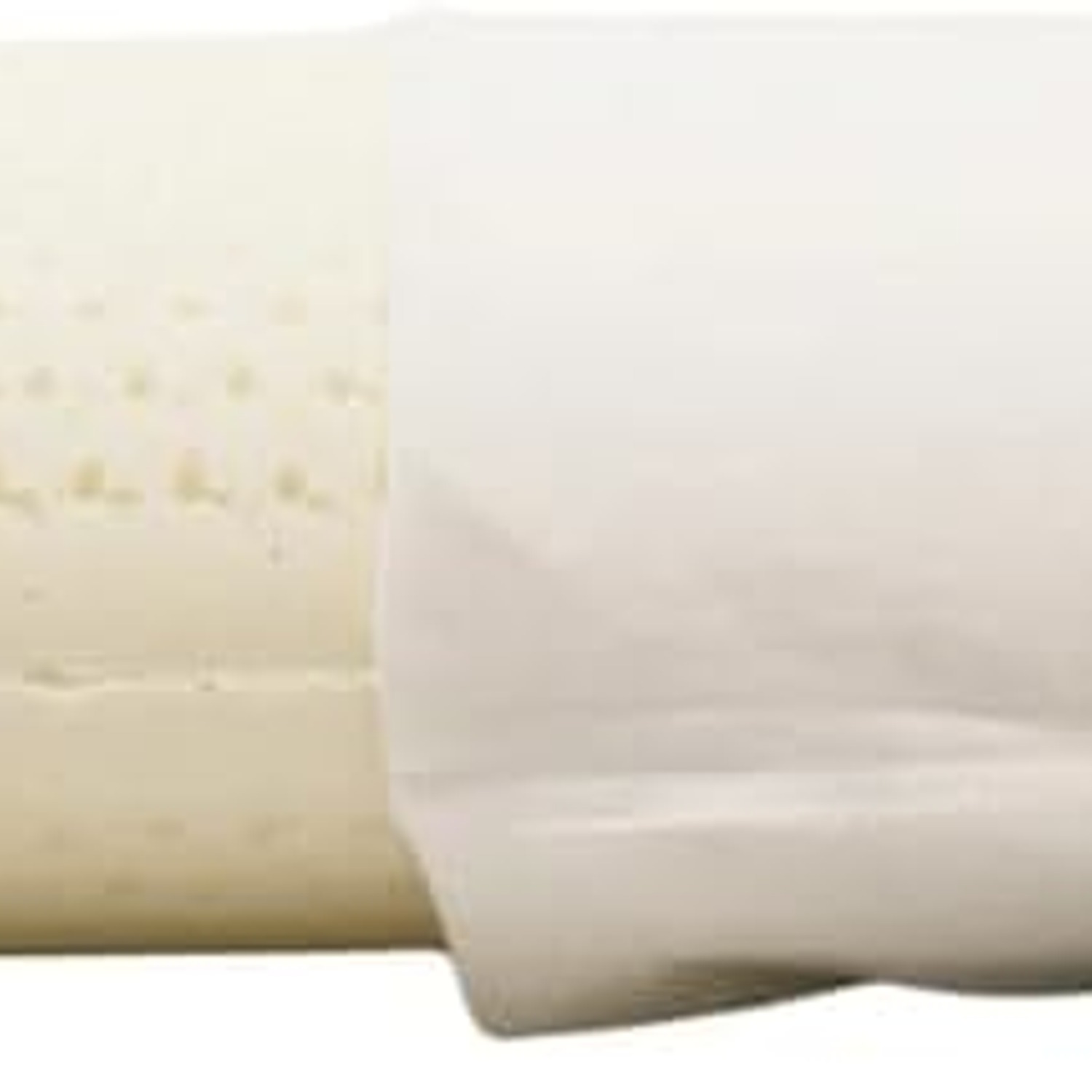
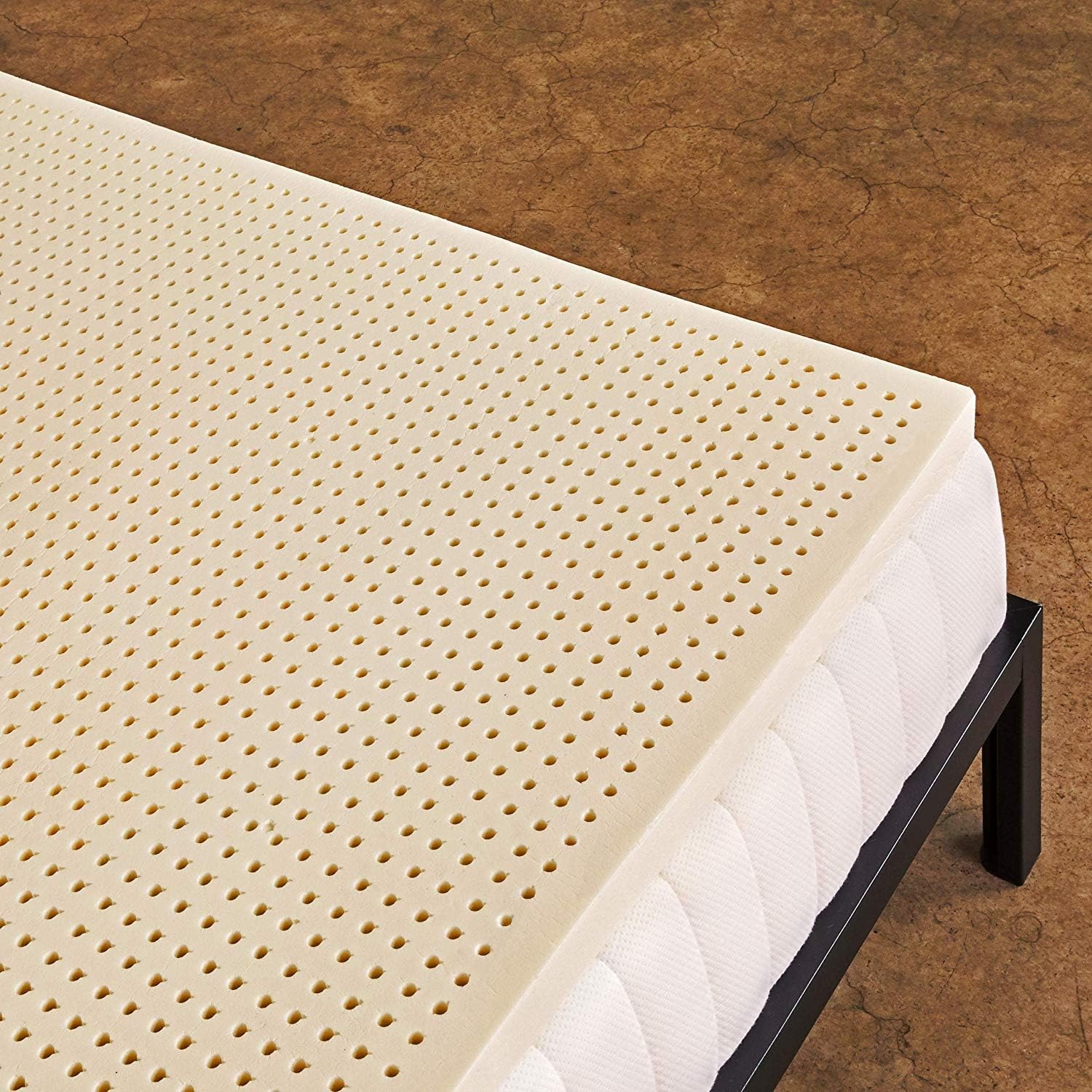
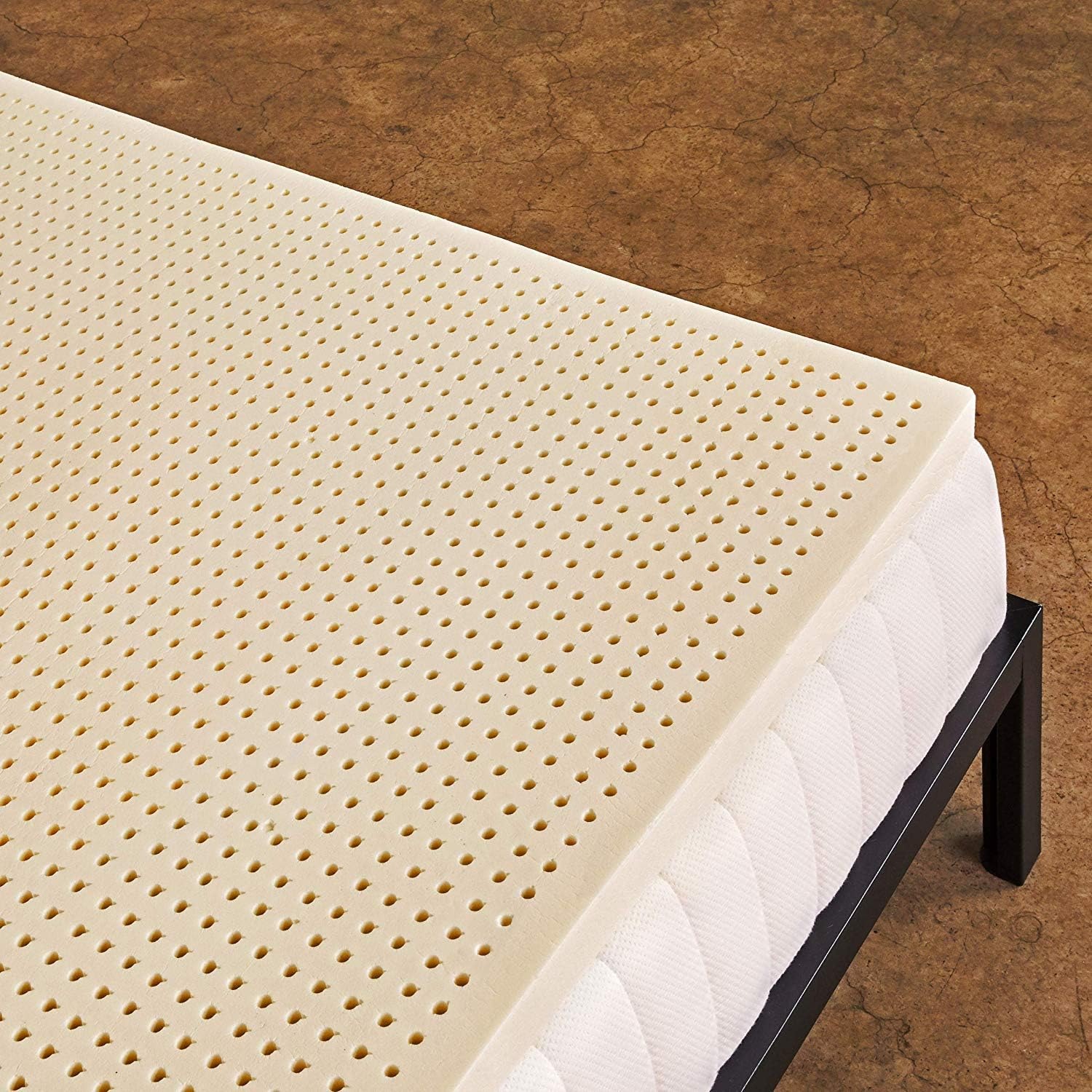
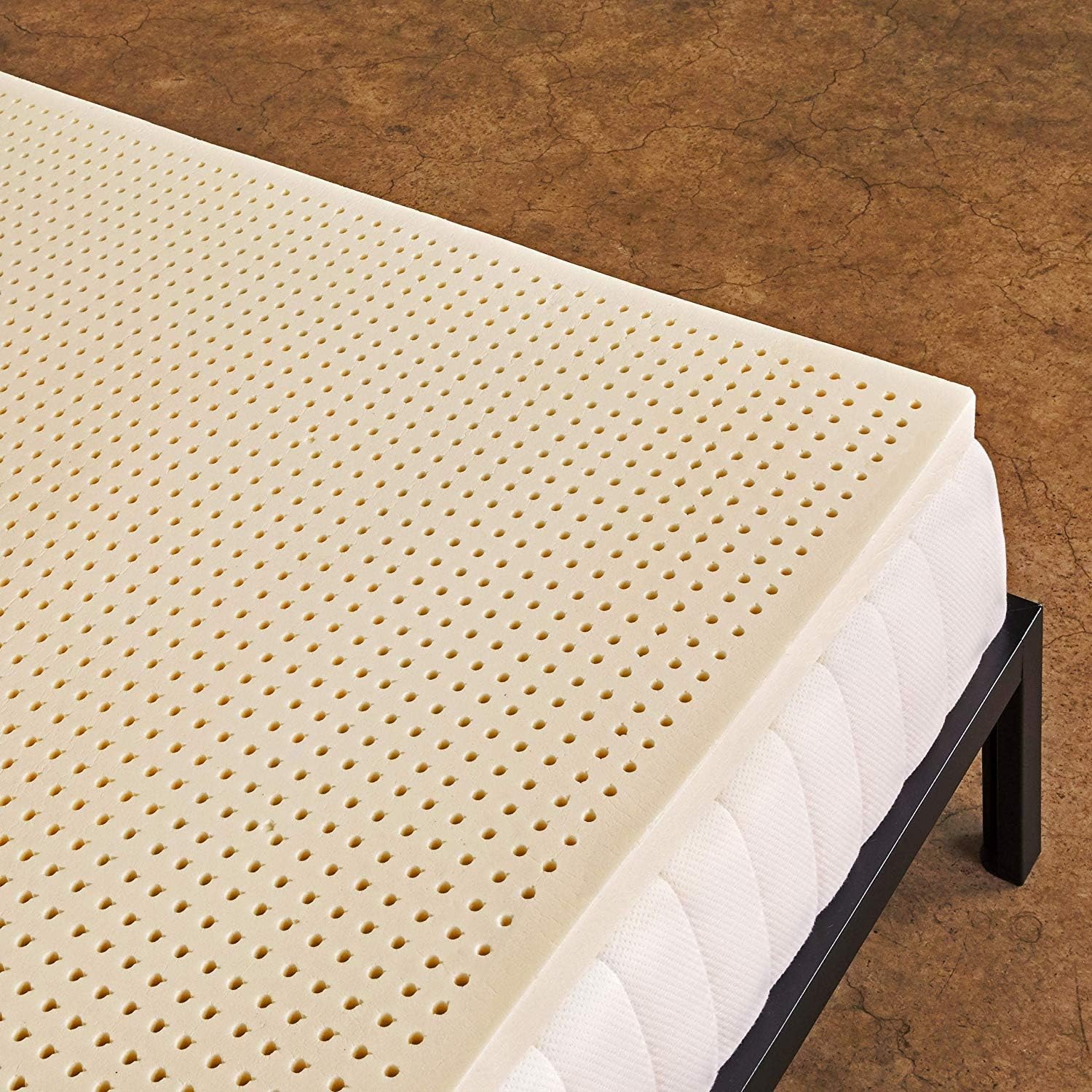
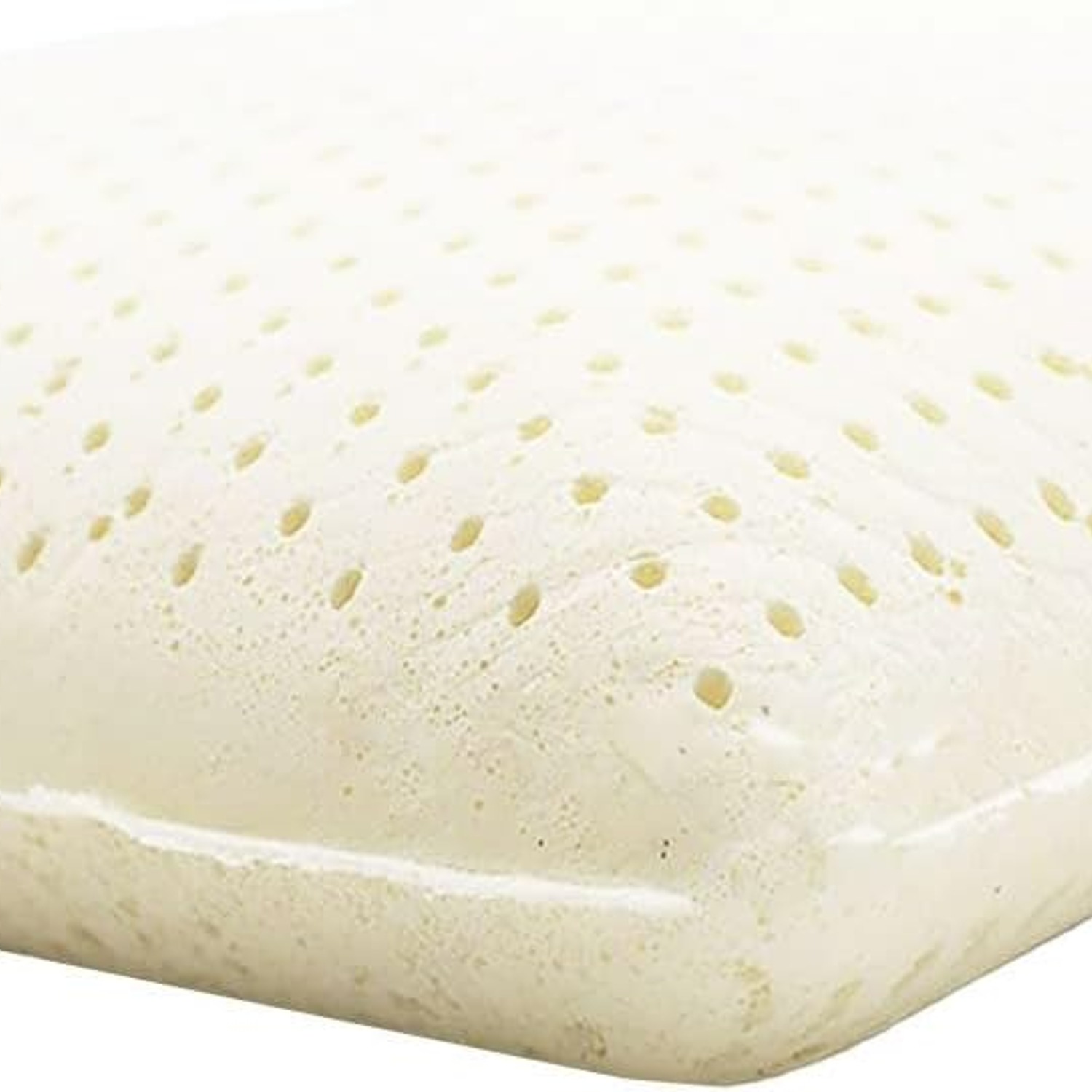
Look at the latex core and you will see a grid of small pin holes running through it. They are not decorative.
Heat and moisture build up anywhere your skin is pressed against a surface for hours. With a sealed foam block, that warm damp air has nowhere to go, so it sits there and you end up flipping the pillow at 3am. Pin holes break up the mass and create paths for air to move through as you shift position. Every turn of the head acts like a small pump.
The holes also change how the material feels. Solid latex is quite firm. Perforated latex has somewhere to compress into, so it gives more readily under the head while still holding the overall shape. That combination of cooling and softening is what people are usually after when they search for the best ventilated pillow.
The cotton cover plays a part too. Cotton moves moisture better than most synthetic knits, so the layer right against your face is not trapping sweat.
The organic cotton cover
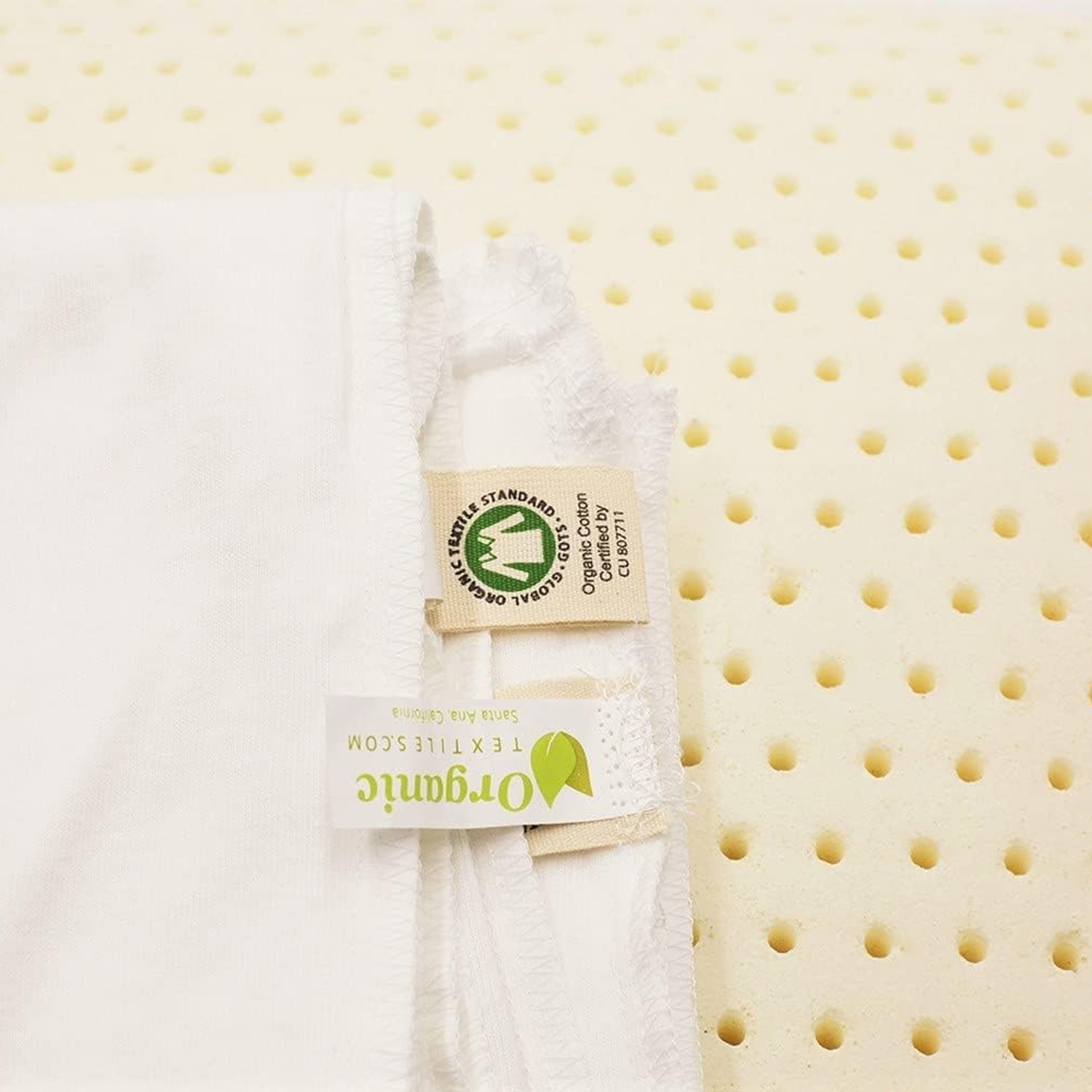
The cover here is 350 thread count organic cotton with GOTS certification. A few things are worth unpacking in that.
GOTS is the Global Organic Textile Standard. It covers how the cotton is grown and how it is processed, including restrictions on the chemicals used in dyeing and finishing. For a fabric that spends every night against your face, that is a meaningful difference from a generic cotton blend.
The 350 thread count gives a smooth, dry handle without being slippery. It feels like a decent set of sheets rather than a utility cover.
Most importantly, it zips. A removable cover is the single most useful feature on any latex pillow, because the core itself must never be washed. The zip lets you strip the cotton off, launder it, and put it back, which means the pillow can stay genuinely clean for years. If you are comparing options and one has a sewn-in cover, that is a real mark against it.
Who this pillow suits
Front sleepers are the clearest match. If you spend most of the night face down or turned to one side with your chest flat, you want as little height as possible, and 5 inches of soft latex is about right.
Back sleepers are the second group. You need enough fill to support the curve at the back of the neck but not so much that your head tips forward. A low, slightly yielding pillow does that job well.
Smaller-framed sleepers often need less loft than the standard recommendation suggests. If your shoulders are narrow, the gap between your head and the mattress is smaller even when you are on your side, so a tall pillow overfills it.
People moving away from synthetic bedding are another group. A natural latex core under certified organic cotton is a straightforward change, and it is one of the few swaps where you are in direct contact with the material every night.
Who should look elsewhere
Dedicated side sleepers with broad shoulders will probably find this too low. The gap between the ear and the mattress on your side can be 5 or 6 inches on its own, so you need more height to keep the head level. There is no point forcing a low pillow to do a job it is not shaped for.
Anyone with a diagnosed natural rubber latex allergy should avoid it and ask their doctor about alternatives. The cover does not change that.
People who like to sink into a pillow may also want something else. Latex holds you up rather than letting you disappear into it. That is the point, but it is a different sensation from down or memory foam, and it takes a few nights to get used to.
Care that actually keeps it going
Latex care is simple once you know the rules. The core is spot clean only. Do not soak it, do not put it in a washing machine, and do not put it in a dryer. Water and heat both break the material down.
Keep it out of direct sunlight. UV is hard on latex and will make the surface crumble over time, so air the pillow in a shaded, well ventilated spot rather than on a sunny windowsill.
Wash the cotton cover on a gentle cool cycle and dry it away from high heat. Adding a separate pillow protector on top is a small step that cuts the laundering frequency and keeps oils and sweat away from the cover itself.
Give the pillow a few hours out of the packaging before the first night. Natural latex can carry a faint scent when new, and airing usually clears it.
Working out the right height for you
If you are unsure, try a test at home. Lie on your mattress in your usual position with your current pillow and have someone look at your head and neck from the side. The line from the base of your skull through your upper spine should be roughly straight. If your chin is tucked toward your chest, your pillow is too tall. If your head is dropping back, it is too short.
Also pay attention to where your pillow ends up by morning. Pushed off the bed usually means too much height. Doubled over means not enough.
Mattress firmness changes the answer too. A soft mattress lets your shoulder sink in, which reduces the height you need. A firm mattress holds you up, so you need a little more. If you recently switched mattresses and your old pillow stopped working, that is probably why.
The short version
This is a 5 inch soft latex pillow with a ventilated core and a zip-off 350 thread count GOTS certified organic cotton cover, measuring 26 by 16 inches and weighing 3 pounds. It is aimed at back and stomach sleepers, and at anyone who finds standard pillows push their head too far forward.
The latex gives springy support that holds its shape rather than flattening. The pin holes help with airflow. The removable cover means you can keep it clean properly. Spot clean the core, wash the cover, keep it out of the sun, and it should serve you for a long stretch.
If you sleep on your side with broad shoulders, look at a higher loft instead. For everyone else who has been quietly fighting their pillow, low loft is often the fix.